Wondering what really comes with buying a private estate in Franklin? It is easy to focus on the privacy, acreage, and beauty first, but this village has a distinct character that can shape everything from your daily routine to your renovation plans. If you are considering an estate purchase here, understanding the land, rules, utilities, and long-term upkeep can help you make a confident decision. Let’s dive in.
Why Franklin feels different
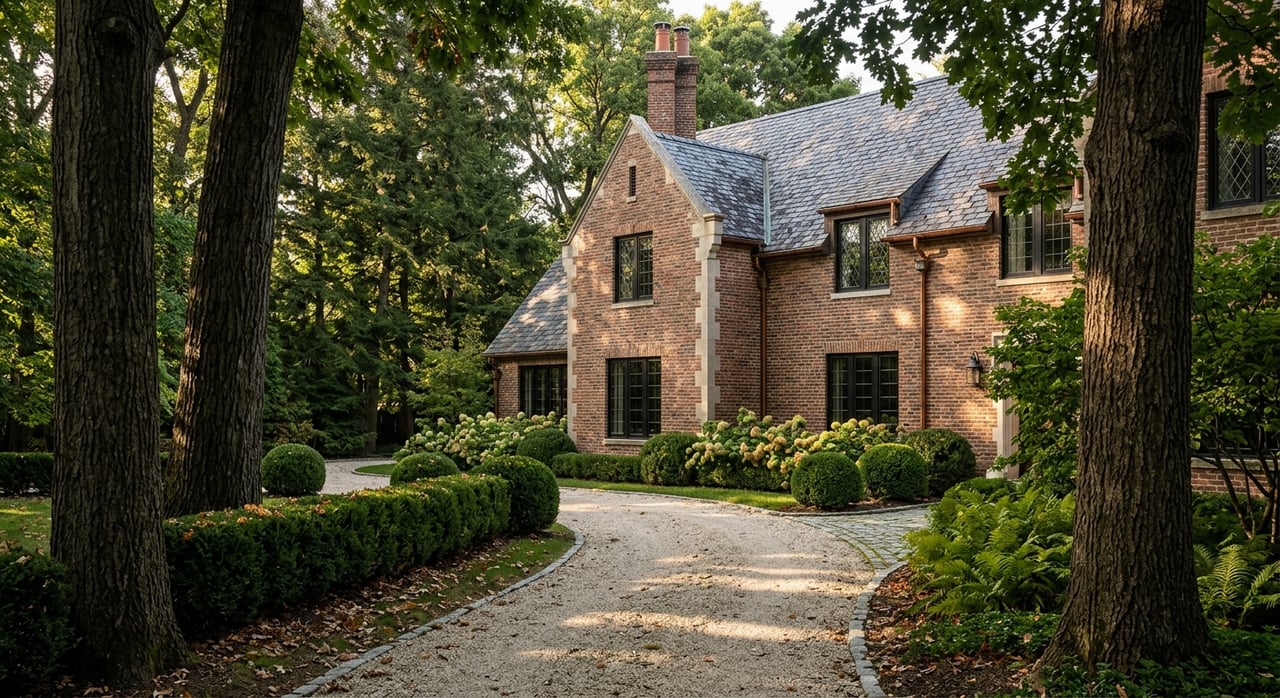
Franklin stands apart because its estate setting is intentional, not accidental. The Village master plan describes a community of widely spaced homes, large lawns, mature trees, ravines, wetlands, and curving streets without curbs, all centered around a compact village core.
That means when you buy here, you are not just buying a large home. You are buying into a preserved physical setting that values open space, natural landscape, and low-density living. For many buyers, that is exactly the appeal.
Estate lots shape the market
Franklin’s lot pattern supports true estate-style living. According to the Village master plan, the average residential lot is slightly larger than one acre, and more than 20 homes sit on parcels of three acres or more.
The zoning framework reinforces that scale. The zoning map includes an Estate Residential District with 130,000 square foot lots and a Large Lot Residential District with 65,000 square foot lots, which helps explain why estate-caliber inventory tends to be limited.
In practical terms, you may need patience. If you want a specific combination of privacy, acreage, mature trees, and a particular architectural style, the number of available options can be small at any given time.
Privacy comes with stewardship
One of Franklin’s biggest draws is its natural privacy. Mature trees, native vegetation, and generous setbacks create a sense of separation that is hard to replicate in more conventional suburban neighborhoods.
At the same time, that privacy often comes with more responsibility. The Village planning documents emphasize protection of mature trees, open space, wetlands, floodplains, ravines, and stream corridors, so ownership may involve more attention to landscaping, drainage, and long-term site care.
Some larger parcels also function like small compounds. The master plan notes that a few properties still include features such as barns and paddocks, and many homes can support amenities like pools, playgrounds, tennis courts, and basketball courts.
Check historic district rules early
If a property is within Franklin’s local historic district, due diligence needs to start early. The Historic District Design Guidelines state that exterior alterations, demolition, and new construction require Historic District Commission review before a permit is granted.
That review can also extend to major open-space changes. Removal of large trees and significant landscape changes may also require commission review, which is especially important if you are imagining an addition, reworked motor court, new accessory structure, or major landscape redesign.
This does not mean you cannot improve a property. It means you should understand the approval path before you fall in love with a plan that may need revisions.
Surveys matter more than listing maps
Estate properties often have irregular boundaries, mature landscape buffers, and site features that are not obvious in marketing materials. Franklin’s official zoning map makes this point clearly by stating that lot lines shown on the map are representative only and are not a substitute for an official survey.
That matters even more when private deed restrictions or plat restrictions are involved. The Village master plan encourages maintenance and updating of those restrictions, especially around minimum lot size and area.
Before making an offer, it is wise to confirm exactly what you are buying. A current survey can help clarify lot lines, encroachments, easements, and how much flexibility you may actually have for future changes.
Zoning can protect value and limit options
Many buyers are drawn to Franklin precisely because the rules help preserve scale and character. The master plan says the zoning ordinance uses setback requirements and height limitations to support the village’s rural feel.
That same structure can also limit what you do next. If you are considering additions, fencing, accessory buildings, grading changes, or tree removal, those questions should be addressed early, particularly on wooded or topographically varied sites.
For estate buyers, this is not a minor detail. A property may feel expansive, but that does not automatically mean every corner of the lot is equally usable for future plans.
Water and septic deserve close review
Utilities are one of the most important practical differences between Franklin and a newer subdivision. The Village master plan states that potable water is supplied by private individual wells, while public pressure sanitary sewers serve many parts of the village, and several homes still rely on individual septic systems.
That mix means you should confirm how each specific property functions. Do not assume that one estate operates like the next, even on the same road.
Water testing should also be treated as standard practice. Michigan EGLE recommends inspecting private wells and testing annually for coliform bacteria and nitrates, and Oakland County states that the well owner is responsible for testing and provides sample bottles and lab testing for private wells.
Review environmental history carefully
Environmental review is not just a box to check. EGLE’s Franklin Village Area page states that the agency continues to evaluate and sample the area, and the Village master plan notes a 2018 groundwater contamination event that affected approximately 40 properties near Franklin Village Plaza, with ongoing monitoring by EGLE.
That does not mean every estate purchase faces the same concern. It does mean buyers should review the environmental history of a property carefully, especially if it is near the affected area or along nearby commercial corridors.
For a high-value purchase, clear diligence around water source, testing, and site history is part of protecting both your investment and your peace of mind.
Think through day-to-day lifestyle fit
Franklin offers privacy and strong regional access, but it does not function like a typical freeway-adjacent suburb. The master plan notes that I-696 lies south of the village, with Telegraph Road, Northwestern Highway, and 12th, 13th, and 14 Mile Roads supporting nearby travel.
That setup can make commuting manageable while still preserving a tucked-away feel. At the same time, the master plan also notes that outside traffic can create some noise and nighttime light spillover near the village edge.
For some buyers, that tradeoff works beautifully. For others, it is worth paying close attention to the exact parcel location, especially if maximum quiet is a top priority.
Schools and daily logistics matter
If school routines are part of your decision, logistics deserve a realistic look. Birmingham Public Schools states that it serves Franklin, and the Village master plan says the public schools have sufficient capacity.
The same plan also notes that young children do not have the opportunity to walk to school from any location in the village. So while Franklin may offer space and privacy, daily transportation planning remains part of the equation for many households.
This is one reason estate buying is about more than square footage. A home can be exceptional on paper, but your everyday routine still needs to work.
Amenities are village-scale, not everywhere
Franklin’s amenities are part of its charm, but they are concentrated rather than spread throughout the community. Franklin Community Park spans more than six acres and includes tennis courts, a gazebo, a walking path, baseball and softball fields, and a barn.
The village center is also known as a shopping and dining destination, while Franklin Park and the Franklin Cider Mill remain widely recognized local attractions. This creates a lifestyle that feels centered around a few meaningful places rather than a dense network of retail and entertainment options.
If you value a preserved village feel, that can be a major advantage. If you want a walk-to-everything lifestyle or newer, lower-maintenance housing patterns, Franklin may feel less aligned with what you need.
A smart Franklin estate checklist
Before you move forward on a private estate in Franklin, focus on a few core questions:
- Is the lot size, shape, and topography a fit for how you want to live?
- Is the property in the local historic district, and if so, what approvals might future changes require?
- Do you have a current survey that confirms boundaries and key site details?
- How do the well, sewer, or septic systems operate on this specific property?
- Has private well testing been completed, and what do the results show?
- Is there any environmental history you should review more closely?
- Do zoning rules, deed restrictions, or site conditions limit additions or outdoor improvements?
- Does the location support your commute, school transportation, and day-to-day routine?
A Franklin estate can offer something rare in Oakland County: meaningful privacy, land, and a preserved village setting that has held its identity over time. The key is making sure the property fits not only your vision, but also the realities of the site and the village’s rules.
If you are considering a confidential purchase, a relocation move, or a search for a true estate-caliber property in Franklin, working with a team that understands the local details can save time and prevent costly surprises. To start a discreet conversation, connect with Crain Homes.
FAQs
What makes a private estate in Franklin different from other luxury homes?
- Franklin private estates are shaped by large lots, mature trees, preserved open space, and low-density planning that creates a distinct village setting.
What should you verify before buying a Franklin estate property?
- You should verify the survey, zoning, deed restrictions, historic district status, utility setup, and any environmental history tied to the property.
Do Franklin estate homes use private wells or septic systems?
- Franklin’s master plan states that homes use private wells for potable water, many areas have public pressure sanitary sewers, and some homes still have individual septic systems.
How do historic district rules affect a Franklin estate purchase?
- Within the local historic district, exterior alterations, demolition, new construction, and some major landscape or tree changes require Historic District Commission review before permits are granted.
Are Franklin estate properties a good fit for low-maintenance living?
- Many are better suited to buyers who value privacy, land, and mature landscape, since larger wooded parcels often involve more site, drainage, and tree-care responsibility.
What amenities are available near Franklin private estates?
- Notable local amenities include Franklin Community Park, the village center’s shopping and dining area, Franklin Park, and the Franklin Cider Mill.