Designing a modern lake home in West Bloomfield starts long before you pick finishes or open your floor plan. You begin by understanding your shoreline, what you can build, and how to make the water the hero from every main living space. If you get the fundamentals right, you enjoy an effortless daily flow now and protect resale later. In this guide, you’ll learn the local rules that shape lakeside design, the architectural moves that work in Michigan, and the amenities that add real value. Let’s dive in.
Know your lake and rules
West Bloomfield sits among some of Oakland County’s most coveted inland lakes, including Cass Lake, Orchard Lake and Pine Lake. If you are exploring options, it helps to review the area’s list of lakes in Oakland County to understand waterbody size, connections and access patterns.
Before you sketch a dock or terrace, confirm your riparian status, any lake‑association bylaws, and township rules. West Bloomfield regulates seasonal docks and off‑season storage, including definitions and the Nov 1 to Mar 31 off‑season window. You can review the township’s storage and lakeside provisions in West Bloomfield’s ordinance document.
Local lake groups summarize a few practical limits that shape residential design. Seasonal docks that meet township standards are commonly allowed without a use permit, while permanent docks typically require township approval. Summaries also note that docks on residential lots generally should not extend more than about 50 feet beyond the ordinary water’s edge, and they may not impede navigation. You can review this local summary on docking guidelines used by West Bloomfield lake associations. Always confirm requirements with the township before committing to a design.
Plan permits early
In Michigan, permanent structures or work that alters bottomlands usually triggers state review. The Department of Environment, Great Lakes, and Energy (EGLE) oversees inland lakes and streams under Part 301. If you plan a permanent dock, seawall, dredging or significant in‑water work, start with EGLE’s Inland Lakes and Streams permit guidance. Coordinate township review at the same time.
Wetlands and floodplain protections, as well as local tree and woodland rules, can affect grading, shoreline placement and accessory structures. Build time for reviews into your schedule. Depending on scope, permitting often takes several weeks to a few months. Many projects benefit from submitting a pre‑application concept and allowing 60 to 90 or more days for approvals.
Architectural moves that live well
Design choices that highlight the water and simplify daily life tend to perform best in West Bloomfield. Focus on three pillars: view corridors, flexible flow and year‑round comfort.
Great rooms with glass and flow
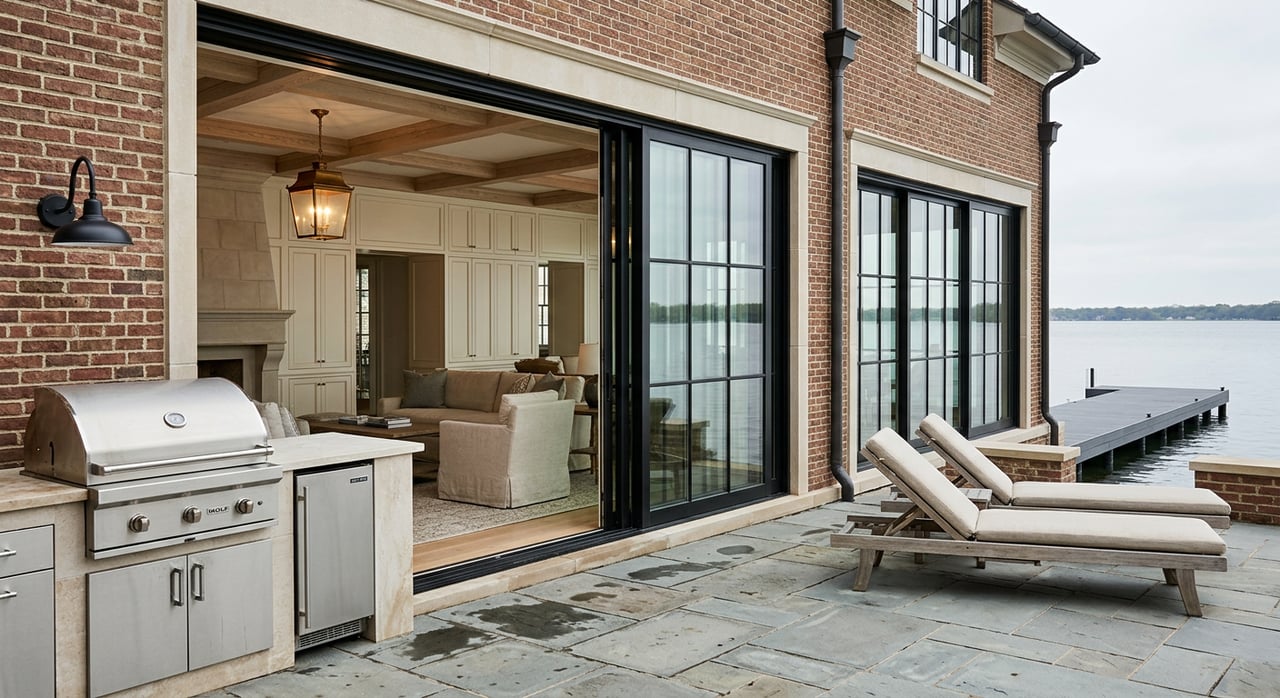
Modern lake homes lean into large, floor‑to‑ceiling windows that frame the water and make the great room feel bigger. Wide sliding or stacking doors open to covered outdoor living so you move easily from kitchen to terrace. Keep frames minimal to preserve sightlines and plan for glare control.
Open plan and primary on main
An open kitchen–great room supports casual gatherings and keeps the view connected. A primary suite on the main level adds daily convenience and expands your buyer pool over time. Flexible rooms that can serve as an office, fitness or guest space help the home adapt as needs change.
Windows that perform in Michigan
Big views require high‑performance glazing. Look for windows with a low U‑factor for winter efficiency, a solar heat gain coefficient that fits your exposure, and modern low‑e coatings. The Efficient Windows Collaborative’s rating guidance is a useful reference as you compare specifications.
For comfort, detail condensation management, insulated frames and careful installation. These steps matter in Michigan winters, especially with double‑height glass walls.
Materials that stand up to lake life
Exterior materials should be durable and low‑maintenance. Fiber‑cement, metal panels, engineered wood and naturally weathering claddings maintain a modern look with less upkeep. In splash zones, choose stainless or hot‑dip galvanized connectors.
Inside, prioritize durable floors where sand and water show up the most. Engineered hardwood, luxury vinyl tile and porcelain or stone in entries and mudrooms hold up well. In the kitchen, stone or other low‑maintenance surfaces keep things refined and practical.
Outdoor living that earns its keep
Covered outdoor rooms extend your season and become a signature feature for entertaining. Many high‑value homes integrate an outdoor kitchen and a protected lounge zone that mirrors the great room’s comfort. National trend reporting points to strong buyer interest in these spaces; see the overview of outdoor living and kitchen trends as you plan features and layouts.
Add a fire feature for shoulder seasons and include lighting that layers task and ambient needs. Keep hardscape near the water permeable where possible to support drainage and shoreline health.
Dock and boatlift decisions
A well‑planned dock or lift is both a lifestyle upgrade and a resale signal that the property is turnkey. Modern residential docks often use modular floating sections, composite decking on aluminum frames or rotationally molded polyethylene. These systems adapt to water levels, resist splinters and reduce annual maintenance. For swim or paddle access, low‑profile floating sections with lower freeboard make entry easier. You can explore examples of materials and configurations in this overview of modern modular dock systems.
Boatlifts are common on inland lakes as a lower‑profile way to store and launch watercraft. Whether a lift or a boathouse is feasible depends on township and state review, and sometimes association rules. Confirm what is permitted on your shoreline before selecting equipment.
Design the shoreline as an asset
Thoughtful shoreline design protects water quality, reduces erosion and enhances the setting. “Living shorelines” that combine native plantings with strategic rock or bioengineering elements absorb wave energy and provide habitat. Michigan State University Extension outlines why these approaches are often cost‑effective and beneficial for lakes. Review their guidance on bioengineering your shoreline as you plan.
Practical tips:
- Keep a native buffer rather than turf to the water’s edge.
- Use permeable paths and patios near the shore.
- Sequence planting in phases and specify noninvasive species.
- Coordinate any stabilization with permits and a professional plan.
Market and resale perspective
West Bloomfield’s lake homes sit in a competitive, design‑aware market within Oakland County. Local snapshots show West Bloomfield positioned in the mid‑to‑upper range of county pricing. For broad context, you can review county trends on Realtor.com’s Oakland County overview and consult your agent for the latest lakefront comps.
Globally, direct waterfront homes often command a premium versus nearby inland properties. Research from Knight Frank underscores how waterfront proximity and quality influence value across markets. This lens supports investments in view corridors, outdoor living and compliant shoreline improvements as choices that often preserve or enhance resale. You can explore the broader perspective in Knight Frank’s waterfront premium analysis.
Features that tend to perform in West Bloomfield:
- Clear, protected sightlines from the great room and kitchen to the water.
- A primary suite on the main level with private outdoor access.
- Covered outdoor living with an integrated kitchen and fire feature.
- A compliant, low‑maintenance dock or lift suited to the lake.
- Durable exterior materials that reduce perceived future upkeep.
Your step‑by‑step checklist
Use this quick path to keep your project on track:
- Verify the lake and your rights. Confirm your lot is riparian and review any lake‑association bylaws and historical dock allocations. Start with the township’s lakeside storage and dock rules and your association’s covenants.
- Align early on permits. Send a concept sketch to West Bloomfield Planning and check EGLE’s Inland Lakes and Streams permit guidance for Part 301 triggers. Ask about wetlands or floodplain studies. Allow 60 to 90 or more days for reviews.
- Design for the view. Prioritize uninterrupted sightlines, a glass‑forward great room and a covered outdoor room. Keep frames slim and plan shading for comfort.
- Choose a dock strategy. Favor low‑maintenance, slip‑resistant materials. Consider low‑profile floating sections for swim and paddle access. Confirm seasonal versus permanent status with the township.
- Protect the shoreline. Specify native buffers and permeable hardscape. Follow MSU Extension best practices and stage plantings for long‑term success.
When you are ready to move from vision to execution, a trusted local team helps you navigate approvals, align the right vendors and keep resale in view. If you would like a confidential conversation about your goals on Cass Lake, Orchard Lake, Pine Lake or another West Bloomfield shoreline, connect with Crain Homes.
FAQs
What permits do I need for a dock in West Bloomfield?
- For permanent docks or in‑water work, you typically need a state permit under EGLE’s Inland Lakes and Streams Part 301 and township review. Seasonal docks that meet township standards may not require a township use permit. Local summaries also note residential docks generally should not extend more than about 50 feet from the ordinary water’s edge.
Are floating docks allowed on West Bloomfield lakes?
- Floating or modular docks are common on inland lakes and are often used as seasonal installations when they meet township standards. Always confirm with West Bloomfield and check EGLE guidance before purchase.
How long do lakefront permits take in Michigan?
- Timelines vary by scope, but reviews often take several weeks to a few months. Planning for 60 to 90 or more days helps keep your schedule realistic.
What is a living shoreline and why choose it?
- A living shoreline combines native plants and natural materials to reduce erosion, absorb wave energy and improve water quality. MSU Extension recommends these approaches as cost‑effective alternatives to hard seawalls.
Which features boost a West Bloomfield lake home’s resale?
- Features that typically help include a glass‑forward great room with protected view corridors, a primary suite on the main level, covered outdoor living with an outdoor kitchen, a compliant low‑maintenance dock or lift and durable exterior materials.