Drive the length of Franklin Road this month and you will pass two businesses running on two very different clocks. One is a 189-year-old cider press that just restarted for the season. The other is the village's only restaurant, newly reopened in the same 1848 building where the last one closed, and it has already been named No. 1 on the Detroit Free Press's 2026 list of the best new restaurants in Michigan and included on Hour Detroit's 2026 Best New Restaurants list. Neither story is really about food. Both are about how rarely anything changes in this village, and what happens when something finally does.
The one-restaurant rule
Franklin is a village of roughly 3,300 people, and from 1979 until 2001 it operated under a quiet structural constraint: no liquor licenses. That ban held until Lori Grundy opened the Franklin Grill in a red carriage house at 32760 Franklin Road, built in 1848, and got the village's first liquor license since the ban began. The Grill changed hands in 2008, ran under new ownership for 16 years serving meatloaf, chicken pot pie and fish and chips, and closed for good at the end of 2023.
That closure mattered more in Franklin than a restaurant closing would almost anywhere else. According to Detroit News reporting from 2024, the Franklin Grill was, at the time, the village's only restaurant in its 2.66-square-mile footprint. When it went dark, the village did not have a second option to fall back on. It had a vacant 1848 building and a gap.
What moved into the gap
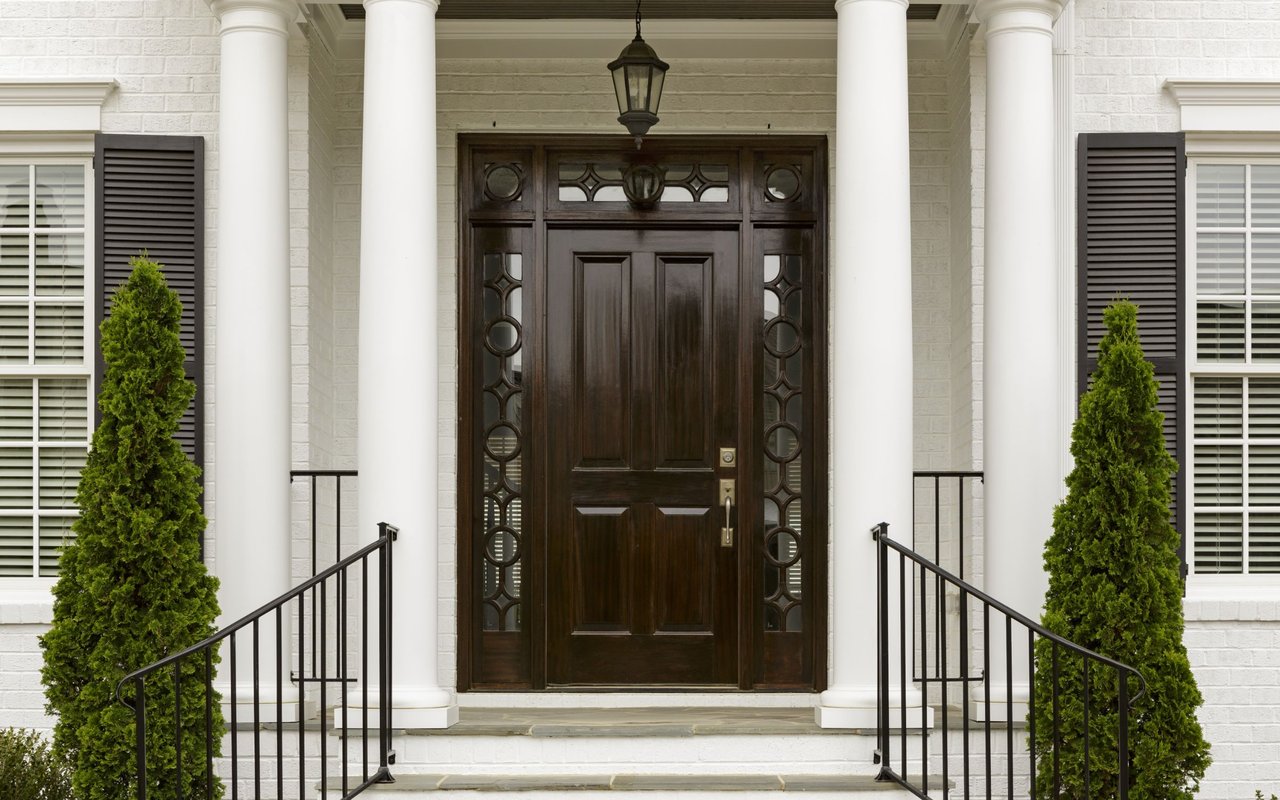
Jay Farner, the former CEO of Rocket Companies and now head of Ronin Capital Partners, bought the carriage house and brought in chef Nick Geftos, who also runs the kitchen at Besa Detroit on Woodward Avenue, to lead a new concept: The Franklin Oyster Bar & Eatery. The design nods to Charleston, South Carolina, more than to the Midwest. Where the building's exterior used to be red, it is now white with dark shutters. Inside, the raw bar centers on oysters sourced through Highland Park's Motor City Seafood Co., alongside a Wagyu cheeseburger built on a Stonefall Farm patty and a fish and chips plate that swaps the usual cod for Icelandic haddock. Pastry chef Christine Anschuetz, who also worked on the project, rounds out the kitchen.
Geftos has been direct about what he is going for. As he put it to Hour Detroit, the aim was never novelty for its own sake: he doesn't need something nobody has seen before, just something that tastes incredible. That is a modest way to describe a restaurant that seats around 100, includes a second-floor private event space, and reopened a building that has also served as a Christmas store and a blacksmith shop since 1848.
The recognition arrived fast
Restaurants take years, sometimes, to earn a reputation beyond their own zip code. The Franklin did it in one season. It was named No. 1 on the Detroit Free Press's 2026 list of the best new restaurants in Michigan, and it also landed among the 10 restaurants on Hour Detroit's 2026 Best New Restaurants list, both released within weeks of each other this year. For a village that has, at most points in its history, supported exactly one restaurant, having that single slot filled by something drawing statewide press is not a small coincidence. It is closer to the best possible outcome of the one-restaurant rule: when there is no room for a mediocre backup, the replacement has to be good enough to justify the wait.
Further down the same road, an older clock restarted on schedule
While The Franklin was earning recognition, the Franklin Cider Mill opened for its 189th season on September 5, a date that puts its first press before the Civil War. The mill runs through November 29 this year, open daily from 8 a.m. to 6 p.m., with shortened hours on Thanksgiving itself. Owner Melanee Peltz Radner framed the return the way she has in past seasons: the mill exists because families keep coming back year after year, and this season is meant to keep that going.
The mill still presses cider on its original water wheel and sells it unfiltered, unpasteurized and without preservatives, the way it has since it converted from a 19th-century gristmill into a cider operation in the early 1900s. Weekends bring live jazz from John Davis along the river, plus the cider dogs and roasted corn that have become as much a draw as the cider itself. The Franklin Market, tucked into the same building, sells Michigan-made jams, honey and cheese, and the Apple Shack sells fresh apples by the half peck or bushel for anyone cooking rather than just snacking.
None of that is new information if you have lived in Franklin for more than one autumn. What is worth noticing is how the mill's calendar has folded in other village institutions this year. The Franklin Public Library is running its Fall Story Time sessions at the mill itself, not at the library, with dates on September 19 and October 10. That is a small detail, but it says something about how central the mill still is to how the village organizes its year. A library does not relocate story time to a business that is only tangential to community life.
A calendar with two anchors now, not one
For years, the rhythm of a Franklin fall had one obvious anchor: the cider mill. The village's Labor Day Round Up, Parade and Art Fair, run by the Franklin Community Association, marked its 81st year on September 7 and functions as the informal kickoff to the season, with the parade running down Franklin Road and the mill already several days into its own run by the time the floats pass. That much has not changed.
What has changed is that the mill is no longer the only reason to plan an evening in the village. A short list of what is actually running right now:
- Franklin Cider Mill: open daily, 8 a.m. to 6 p.m., through November 29, with live jazz and extra activities on weekends
- The Franklin Oyster Bar & Eatery: open for lunch, dinner and weekend brunch at 32760 Franklin Road
- Franklin Public Library Fall Story Time: held at the cider mill on September 19 and October 10
That is not a long list, and it is not meant to be. It is the entire current inventory of what changed in a village that changes slowly on purpose. A cider mill that predates the telephone and a restaurant that only just reopened its doors now share the same road and the same season, both drawing outside attention, both run by people with long histories in their respective crafts.
Why this is the story, not a footnote to it
It would be easy to write this as two separate items: cider mill opens for the season, new restaurant earns recognition. But treating them separately misses what actually makes Franklin distinct. This is a village that does not add businesses so much as it occasionally replaces one, carefully, and when it finally does, the replacement tends to matter more than it would anywhere with more turnover. The Franklin Grill held the village's only liquor license for more than two decades across two ownership groups. The mill has held its ground for 189 seasons. Neither institution treats its position lightly, and this fall, both of them are proving it at the same time.
If you already live here, none of this changes how you plan a Saturday, beyond maybe trying the fish and chips before the cider mill closes for the year on November 29. If you are watching Franklin from the outside and wondering what a place like this values, the answer is sitting on Franklin Road: patience, and the occasional reward for it.
For more on what makes this village's character worth understanding before you look at any of its homes, the Franklin neighborhood guide and our earlier look at Franklin's hidden historic corners both go deeper into what gives this village its particular pace.
Crain Homes works with families who care as much about a village's rhythm as its real estate. If Franklin's is starting to make sense to you, reach out to request a confidential valuation and we will walk you through what it actually takes to call this village home.