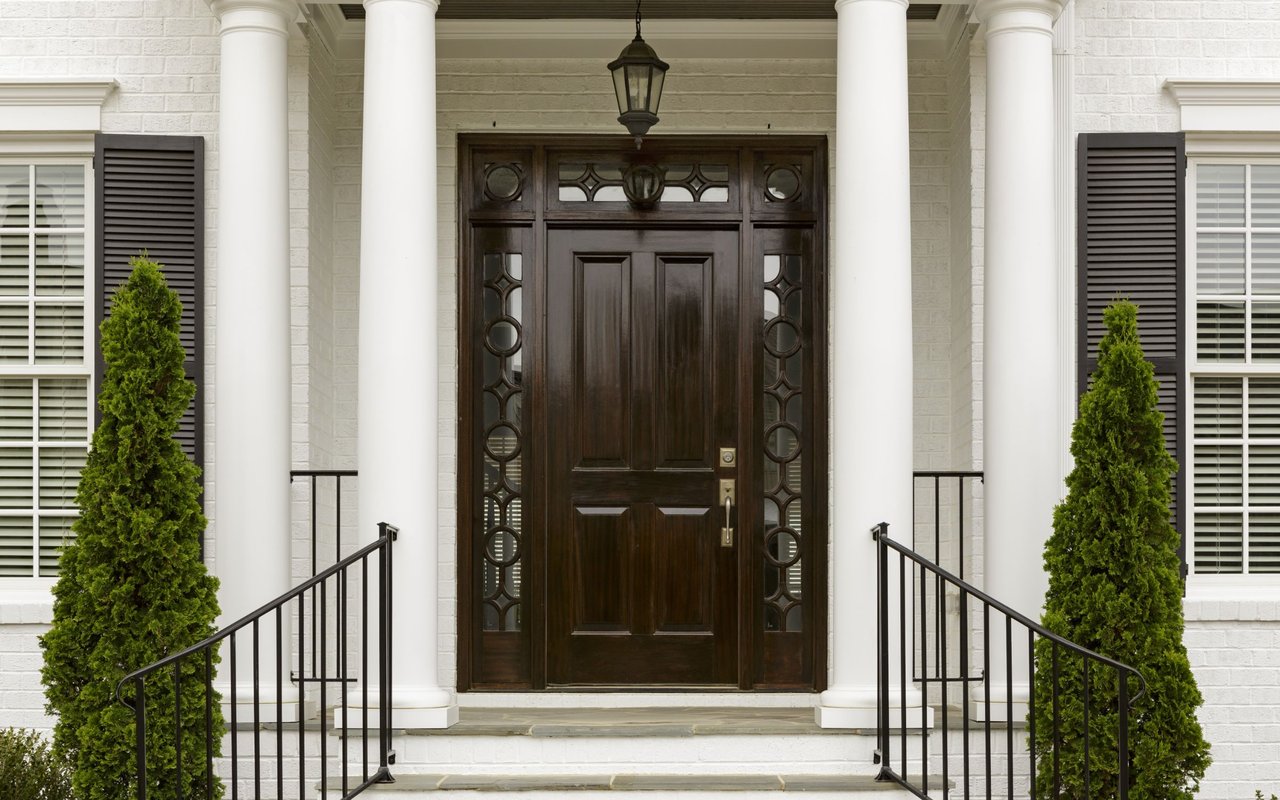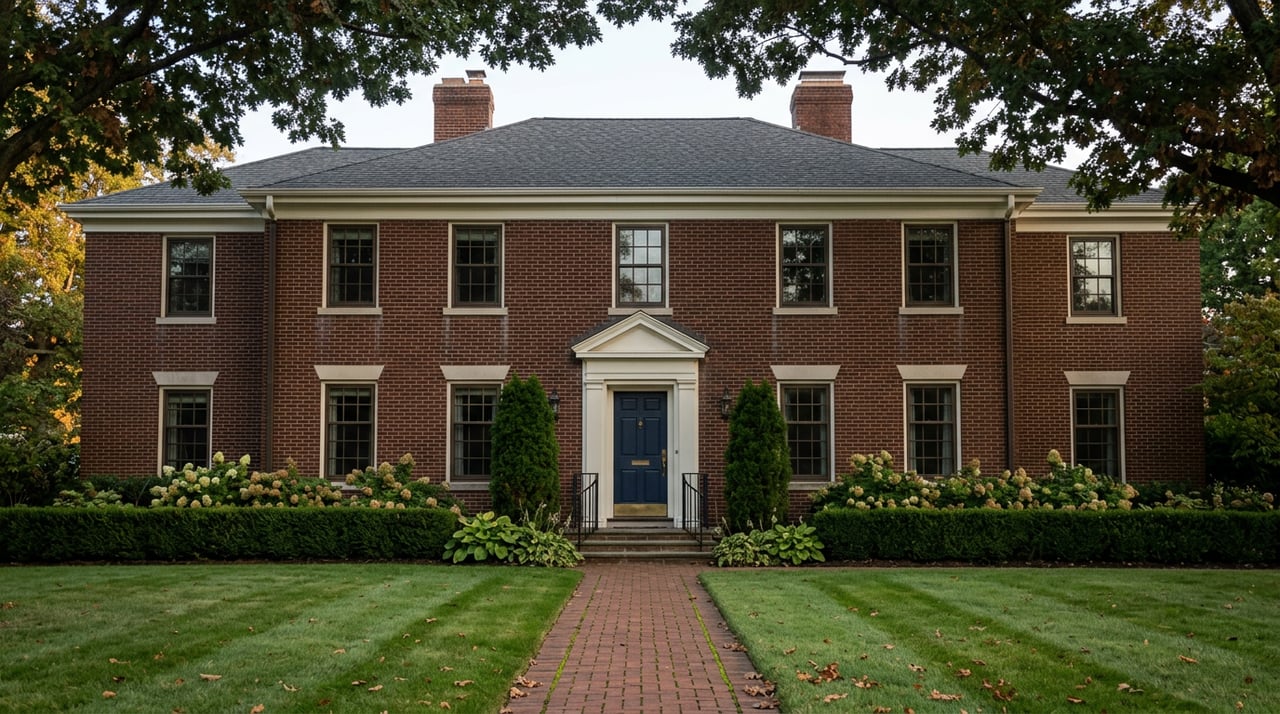
Walk two comparable brick colonials in Detroit's Boston-Edison Historic District, similar era, similar square footage, similar limestone trim along Chicago Boulevard, and it is entirely possible for their summer tax bills to differ by thousands of dollars. A buyer touring both with a checklist of finishes and mechanicals rarely thinks to ask why the tax lines diverge so sharply, and that is the question worth asking before an offer goes in on any historic Detroit property.
The answer is a program called the Neighborhood Enterprise Zone Homestead abatement, or NEZ-H. It is not a rumor or a workaround. It is a formal, transferable tax break written into Michigan's Neighborhood Enterprise Zone Act in 1992 and applied across large swaths of Detroit's grandest addresses starting in the mid-2000s. Understanding how it works, and more importantly what it does to a home's sale price before a buyer ever sees the listing, changes the math on comparing Boston-Edison to Indian Village to Palmer Woods to Sherwood Forest.
What the abatement actually does
Detroit City Council designated dozens of NEZ Homestead zones in 2006 and 2007 to encourage people to buy, occupy, and renovate homes in areas the city considered underinvested. Qualifying buyers who commit to at least $500 in repairs or improvements receive a 50 percent reduction in both the City of Detroit and Wayne County operating millage on the structure itself, according to the City of Detroit's own assessor guidance. That typically works out to a 15 to 20 percent savings on the total tax bill for most participating homeowners.
The zones were not scattered randomly. Detroit officials designated as much of the city as state law allowed, and reporting on the program at the time noted the areas selected ranged from modest, high-homeownership blocks to some of the city's grandest historic districts, including Palmer Woods, Sherwood Forest, and Indian Village. Boston-Edison and the adjacent Atkinson corridor received the same designation. The University District carries it too.
That detail matters because it means the tax break was never evenly distributed across Detroit. It was concentrated, deliberately, in the same historic districts where Crain Homes fields the most inquiries from relocating executives and privacy-conscious buyers evaluating urban Detroit alongside the northern suburbs.
The number that changes the comparison
Here is the part most buyers never hear from a listing sheet. Researchers Hodge and Komarek studied Detroit home sales from 1997 through 2010 and found that NEZ-H designation produced a 6 to 10 percent bump in sale prices at the point of designation. That alone would be a modest, expected reaction to a real financial benefit.
The more consequential finding is what happened after that. When the researchers isolated actual program participants rather than just zone residency, they found buyers were overcapitalizing the benefit, paying approximately 39 percent more for properties carrying the abatement than the tax savings alone would justify. In plain terms, buyers were pricing in the discount and then some, treating a 15 to 20 percent annual tax reduction as though it were worth nearly two-fifths more on the purchase price.
That is the mechanism worth sitting with. A lower tax bill on a listing is not free money handed to the next owner. In practice, sellers and their agents have already built a premium into the asking price that reflects, and often exceeds, the value of the break itself. A buyer who sees a modest tax bill and assumes it is pure upside is working from an incomplete picture.
The paperwork the break comes with
The abatement is transferable, meaning a new owner can keep it if they meet the same qualifications the original applicant did. That transfer is not automatic. It requires:
- A Property Transfer Affidavit and Principal Residence Exemption on file with the Office of the Assessor
- A registered deed or land contract in the new owner's name
- Continued owner occupancy as a primary residence
- A renewed commitment to at least $500 in repairs or improvements
- Notification to the mortgage servicer, because a NEZ-H parcel generates two separate tax bills each cycle
That last point catches people at closing more often than any other. A parcel with an active certificate is billed twice each summer and twice each winter: one bill for the land at the regular rate, and a separate bill for the structure at the reduced rate. Mortgage escrow accounts set up around a single expected tax bill can miscalculate the total, and the city is explicit that failure to pay either bill can result in the abatement being pulled or the property moving toward tax foreclosure.
The millage math itself is public record. The City of Detroit's operating millage drops from 19.9520 to 9.9760 for a NEZ-H property, and the Wayne County operating millage drops from 5.6483 to 2.8241. Every other millage line on the bill, including school and library debt, stays the same.
The clock is already running
Certificates last 15 years from issuance, and the first wave went out between 2006 and 2008. That means a meaningful share of Detroit's NEZ-H inventory is already at or past its original expiration window. Around the same 2021 boundary revision, the city notified roughly 2,800 residents in NEZ zones that they were eligible to apply for a new certificate as their original one approached expiration, part of a one-time 15-year renewal option for owners who still qualified. As of the most recent citywide count reported by BridgeDetroit in 2023, roughly 7,800 Detroit properties still held an active NEZ break.
None of this is theoretical for a buyer today. A home in Boston-Edison or Indian Village carrying a certificate issued in 2007 is closer to the beginning of its second 15-year window than the end. A home where the certificate was issued more recently has years of runway left. Asking the seller's agent for the certificate's issuance date and remaining term is not a minor diligence step. It is the single question that tells you whether the reduced tax line you are underwriting into your monthly budget is a stable feature of the home or a temporary condition about to reset to full value.
Why this isn't going away, and why it might
Detroit has spent the past three years debating a Land Value Tax plan that would restructure the entire city tax system, cutting rates on structures while raising them sharply on vacant and underbuilt land. One piece of that plan, confirmed by the city's own FAQ page, is that no new NEZ certificates would be issued if the plan passes. Existing holders would be grandfathered, but the program as a tool for new buyers would end.
As of January 2026, that legislation remains stalled in the Michigan House, according to reporting from Detroit City News, which noted the bills cleared the House Local Government Committee but have not moved through the full chamber. For now, the NEZ-H program continues to operate exactly as described above. But the stalled reform is worth knowing about for a different reason: if new zones are permanently off the table, the supply of tax-advantaged historic homes in Boston-Edison, Indian Village, Palmer Woods, and Sherwood Forest is effectively fixed at whatever remains from the 2006 to 2008 designations. That scarcity is one more reason the overcapitalization pattern Hodge and Komarek documented is likely to persist rather than correct itself.
Demand in these districts has not softened while the policy debate drags on. Crain's Detroit Business reported in May 2026 that brokers are seeing strong activity in Detroit's luxury segment, with limited inventory for turn-key historic homes in Indian Village specifically. Tight supply and a capitalized tax benefit tend to reinforce each other, which is exactly the kind of dynamic a buyer needs to price with eyes open rather than discover at the closing table.
What to ask before you write an offer
Before making an offer on a home in any of Detroit's NEZ-designated historic districts, request in writing:
- The NEZ certificate number and its original issuance date
- Confirmation the current owner has met the improvement requirement and kept both tax bills current
- Whether the seller's agent can produce the two most recent tax bills showing the land and structure charges separately
- A written estimate of what the full, non-abated tax bill would look like, so you can model your carrying costs after the certificate expires or if a future reapplication is denied
A buyer who has that information can compare a Boston-Edison mansion to a Palmer Woods estate on equal footing, weighing years of tax runway against purchase price rather than comparing two tax bills that look similar today but sit at very different points in a 15-year cycle.
A few common questions
Does the abatement transfer automatically when I buy a home with one in place? No. The certificate stays with the property only if the new owner files the required paperwork, including a Property Transfer Affidavit and Principal Residence Exemption, and recommits to the improvement requirement. Skipping this step at closing can mean losing the break entirely.
If the certificate expires while I own the home, does my tax bill jump immediately? Once a certificate reaches the end of its term, the structure reverts to the full, non-abated millage rate. Owners who still qualify can apply for the one-time 15-year renewal the city introduced with its 2021 boundary changes, but that renewal is not guaranteed indefinitely.
Is the two-bill structure something my lender will handle automatically? Not always. Because a NEZ-H parcel generates separate summer and winter bills for land and structure, it is worth confirming directly with your mortgage servicer that the escrow account is built to capture both, rather than assuming a single combined bill.
Buying in Detroit's historic districts rewards the kind of close reading that most national guides skip entirely. Crain Homes works these blocks alongside the northern Oakland County suburbs we know best, and we walk every client through certificate dates, tax structures, and carrying costs before an offer goes in, not after. If you are weighing a historic Detroit property against a suburban estate, Crain Homes can put real numbers behind both sides of that comparison. Request a Confidential Valuation to start the conversation.
This article is general information, not legal, tax or financial advice. Consult a qualified professional about your situation.